 |
 |
| << Back Poser >> |
| From Accra to Brazzaville: The pain of flying on Air Côte d’Ivoire |
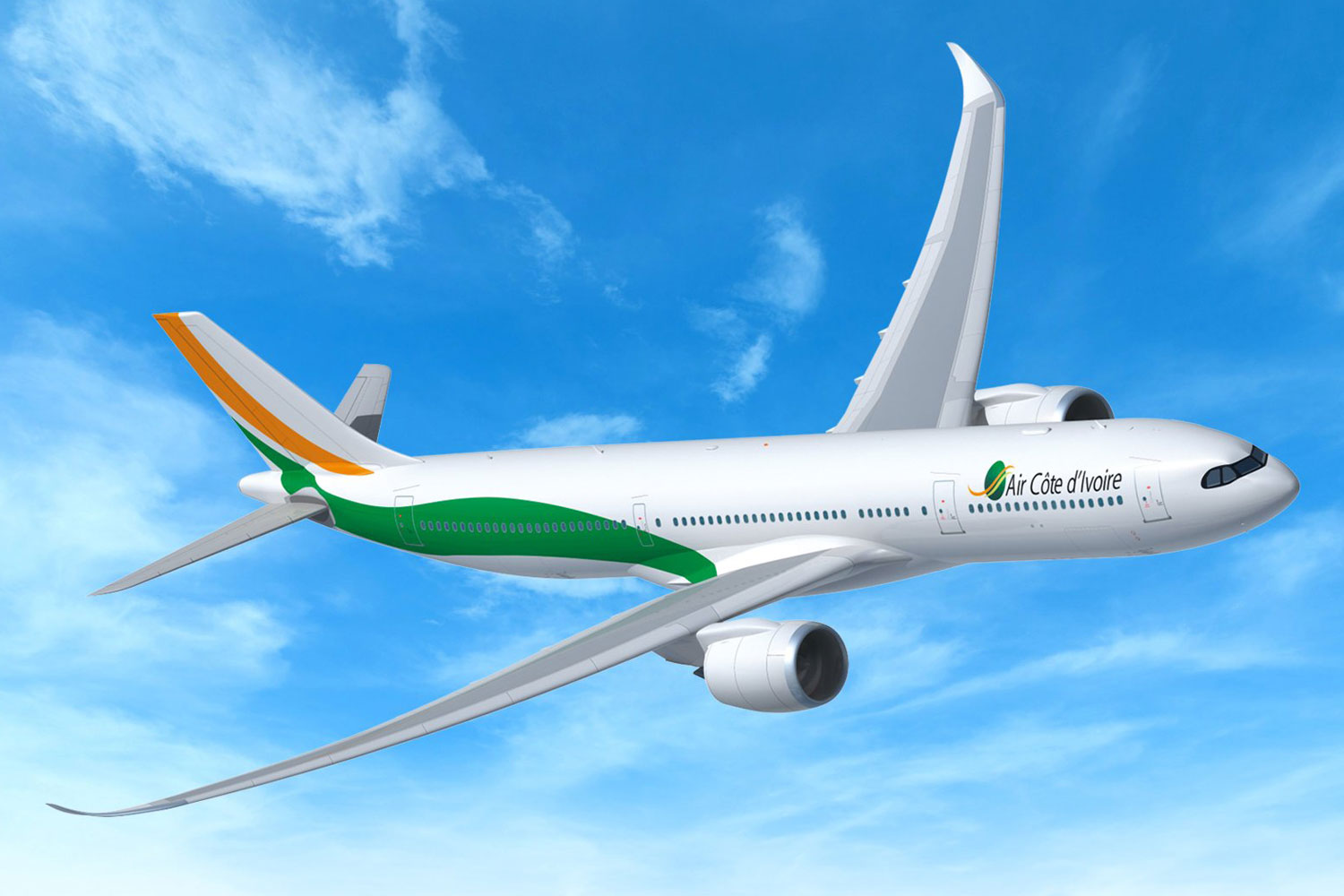 Travelling within Africa is not only expensive, but also grueling, stressful and painful. There are the mandatory visa requirements before departure and visa-on-arrival, which are also quite expensive. Some countries charge between $100 to $250 for single entry visa into another African country – the absurdity hits you hard in the face.
The visa application processes are not easy. The demand for all kinds of documents, including bank statements even make it more cumbersome, and some countries even refuse to grant visas. Angola is the first African country so far to deny me visa – I am still laughing about it, because it is funny. Last month I received a call from the African Development Bank (AfDB) asking for my availability to attend their 2026 Annual Meetings in Brazzaville, Congo. I was surprised, because even though I have been covering the AfDB for years, they haven’t invited me to their events in the last 9 years. The last Annual Meetings I attended was the 2017 edition in Ahmedabad in India. I was available and so, accepted to attend. I started preparing for the visa process as I require a visa to travel to the Republic of Congo. The visa process was smooth, but I had to wait for three days for a handwritten visa! Anyway, I also received the air ticket and it was on Air Côte d’Ivoire. I have travelled on Air Côte d’Ivoire many times, and have had one stressful experience. I was invited to Dakar, Senegal, by Code for Africa in July 2022 to speak at a training for journalists from across Africa. On our way back to Accra, when we landed in Abidjan, we were left in a state of confusion. We received mixed information as to when we were returning to Accra. After waiting for some time, we were eventually bussed to a hotel. Told we had to sleep over. What? That wasn’t the plan. But anyway, we had to. So we slept over, were picked up the following day after so many back and forth with the organisers. Those of us on the flight to Accra and some other cities, were put on flights to leave. But I remember a lady from Abuja, who had to stay for another day! In all those stressful moments, communication flow was bad. And there was the language barrier – those of us who didn’t speak French, suffered even more. The vicious cycle repeated itself and caught me once again when we set off to Congo Brazzaville. Our flight from Accra to Abidjan where we would change flights to Brazzaville was scheduled to depart at 11:00am on Saturday May 23. We arrived on time and checked in. But the flight didn’t take off until around 1:50pm, nearly three hours after the original schedule. No one said anything to passengers, except the notice board blinking ‘delayed to 13:50’. Eventually, the flight took off. When we arrived in Abidjan, we were three hours behind our connecting flight to Brazzaville, which was scheduled to depart at 3:00pm. But there was no communication, and there was the language barrier. Then our ordeal began. On arrival in Abidjan, transiting passengers are required to get new boarding passes, even though they already have a boarding pass from their originating flight for their connecting flights. The vicious cycle repeated itself and caught me once again when we set off to Congo Brazzaville. Our flight from Accra to Abidjan where we would change flights to Brazzaville was scheduled to depart at 11:00am on Saturday May 23. We arrived on time and checked in. But the flight didn’t take off until around 1:50pm, nearly three hours after the original schedule. We waited in line at the transit counter to check-in for our connecting flight. When it got to our turn, ground staff casually told us and some other passengers on other routes to sit aside and wait. Why? No one said anything specific, except to sit aside and wait. We sat aside. Some of us stood aside. But it didn’t take long for us to realise that our scheduled connecting flight had long departed, and Air Côte d’Ivoire had no more flights heading to Brazzaville. We were stuck in Abidjan – in a cloud of confusion and uncertainty. We however thought, let’s hang faintly on hope, that, there would be another flight, but there was none. We were then chaotically taken through immigration, then handed to a shuttle driver to take us to a hotel. The whole atmosphere was chaotic. It didn’t look like the airline was well organised. The driver drove us to Golden Hotel in Marcory, a suburb of Abidjan. When we arrived, it was obvious we were being sent into another hell hole. The vicinity of the hotel didn’t look as one would expect for a place an airline dumping its passengers after stressful flights would take them. I had been up since 4:00am to prepare for this trip, and was at the airport by 8:30am. So, I was already struggling with sleep deficit, and my body was yearning for some rest and relaxation. When we were ushered into our rooms, it was as I feared. The room looked and felt bare. Literally dry. There was barely any furnishing to cushion weary bones of any traveller. But that’s where they put us. We grudgingly tried to settle in. There were travellers heading to Cameroon, Mali and other countries. But I was heading to Brazzaville with three others – two Ghanaians and one Nigerian. We hurdled together and provided each other some succour. Before we left the airport for the hotel, Air Côte d’Ivoire staff had told us that the next available flight was on Sunday May 24, at 3pm, and we should be at the airport by 12 noon the following day to make the flight. But at midnight while I slept, a hotel staff barged into my room after knocking and I did not respond – he used a master key to open the door. He came yelling at me to wake up and go to the airport. Drowsy and sleepy, I muttered to him that we were not leaving at that time, and that we have been told we would leave at noon and not midnight, so I didn’t get up. He reluctantly left me to continue to sleep. But some of the passengers went, and at the airport, airline staff told them to go back to sleep and return at noon instead. So at least, I was able to catch some sleep. In the morning, we went for breakfast. That was another story, for a hotel hosting airline passengers, the breakfast didn’t look sumptuous enough, and there weren’t many choices as well. Soon after breakfast, we noticed a change in the conduct of hotel staff. As we were waiting to leave at 12 noon, some hotel staff started insisting that our flight had been rescheduled for Tuesday May 26. How could that possibly be. In all these, we didn’t receive a single communication directly from the airline. If we accepted to travel to Brazzaville on Tuesday, we would have missed two events – on 24 and 25. That idea of travelling on 26 is even more bizarre than all the horrendous experiences we had been through already, because our tickets clearly stated that we were connecting to Brazzaville on May 23, at 3:00pm. But at midnight while I slept, a hotel staff barged into my room after knocking and I did not respond – he used a master key to open the door. He came yelling at me to wake up and go to the airport. As we pushed back, the hotel staff kept insisting that we have to stay till Tuesday May 26. We refused, and insisted that we would leave for the airport on Sunday the 24. I started wondering where the information was coming from. When I asked one hotel staff she showed me a list that included everyone’s name but mine. Then she showed me a WhatsApp message saying I was included. The WhatsApp message supposedly came from an ‘agent’, I got to know later, and it had a photo of my passport details. I still don’t now how come my name wasn’t on the list but in a WhatsApp message. But why was anyone interested in keeping us in the hotel for three days? How necessary was our long and continued stay at the hotel? Was someone or a group going to benefit from our long and needless stay at the hotel? As we pushed back, the hotel staff kept insisting that we have to stay till Tuesday May 26. We refused, and insisted that we would leave for the airport on the 24. We however insisted we would head to the airport at 12 noon, and requested for a shuttle to drop us off. Then the hotel staff became angry, rude and hostile towards us. But thankfully, we all restrained ourselves. They refused to get us the shuttle to take us to the airport, insisting that we are supposed to leave on 26, three days after arriving from Accra. Meanwhile, the other passengers who went to the airport at dawn kept insisting that they have been told to return at noon for the connecting flight and not three days after arriving. When the hotel refused to drop us off at the airport, we took Uber and went. At the airport, we queued to check in. The Nigerian passenger went first and was checked in. So we were relieved. But when it was our turn, those of us from Ghana, we were told to go to the ticketing office to get new tickets issued. We went to the ticketing office, and were issued new tickets. We checked in and got on board the flight. Another stretch, the aircraft took off two hours later. While we were on board, Air Côte d’Ivoire started loading luggage. Anyway, we finally arrived in Brazzaville and checked into our hotels around 12 midnight. But why was anyone interested in keeping us in the hotel for three days? How necessary was our long and continued stay at the hotel? Was someone or a group going to benefit from our long and needless stay at the hotel? The 2015 Africa Tourism Monitor, an annual report on tourism in Africa, a publication of the AfDB, has pointed out that although many major airlines fly to Africa from North America, Europe and Asia, once visitors reach the continent, they encounter difficulties in intra-Africa travel from East to West, and North to South. “One of the major challenges to travel in Africa is stringent and restricted air service markets, designed to protect the share held by state-owned air carriers,” it said. It also noted that The Yamoussoukro Decision or “Open Skies for Africa” adopted at the start of the millennium to deregulate air services on the continent are yet to be implemented though the latter alone is believed to be capable of creating 155,000 new jobs and contributing $1.3 billion to the continent’s GDP if implemented by only a quarter of African countries. The aviation industry is said to contribute about $72.5 billion to Africa’s GDP, and across the continent, it supports 6.8 million jobs. But why are airlines in Africa continuing to behave so badly, instead of working hard to improve and expand the industry? By Emmanuel K Dogbevi |
| Ghana Business News |
|
ELECTRICITY: NDPHC restores 450MW Alaoji plant By Obas Esiesesa The Managing Director and Chief Executive Officer of the Niger Delta Power Holding Company, Engr. Jennifer Adighije has disclosed that operations at the 450 megawatts Alaoji Open Cycle Power Plant in Abia State has been restored after it was shut down in 2023 over gas supply and metering disputes. Adighije disclosed this during […] |
|
Court grants CBN sole ownership of eNaira platform The Federal High Court sitting in Abuja, on Friday, granted the Central Bank of Nigeria (CBN) sole ownership rights to the eNaira digital currency platform. |
|
Over 41% of electricity consumers still without meters –NERC By Obas Esiedesa About 5.1 million consumers, representing about 41 per cent of Nigeria’s 12.31 million active electricity customers were without prepaid meters as of February 2026, according to data released by the Nigerian Electricity Regulatory Commission (NERC). The Commission, in its January and February 2026 metering factsheet, disclosed that only 7.21 million customers had been metered […] |
|
Nigeria’s GDP growth rises 3.89% in Q1’26 By Elizabeth Adegbesan Nigeria’s Gross Domestic Product (GDP) rose to 3.89 per cent in the first quarter of this year, Q1’26, representing a 0.76 percentage point increase from the 3.13 per cent recorded in the same period of 2025, Q1’25. However, the GDP growth in Q1’26, represents a 0.18 percentage points decline from the 4.07 per […] |
|
Manufacturers cry out over taxes, FX costs, insecurity, poor power supply By Victor Ahiuma-Young Manufacturers under the aegis of the Association of Food, Beverage and Tobacco Employers, AFBTE, have indicated that its operating environment in Nigeria is worsening. It cited excessive taxes and levies, high interest rate, insecurity, poor infrastructure and unstable power supply as major threats to business survival. The employers warned that despite recent macroeconomic […] |
|
Seme Customs grows revenue by 448% in 2mths •Says smugglers behind fuel scarcity By Providence Ayanfeoluwa & Efe Onodjae The Nigeria Customs Service, NCS, Seme Area Command, generated N9.79 billion between March 18 and May 2026, representing a 448 per cent increase compared to the N2.19 billion recorded in the corresponding period of 2025. Speaking during his first media briefing at the command, the […] |