 |
 |
| << Back Poser >> |
| Why many Nigerians choose non-interest banking – Summit Bank CEO |
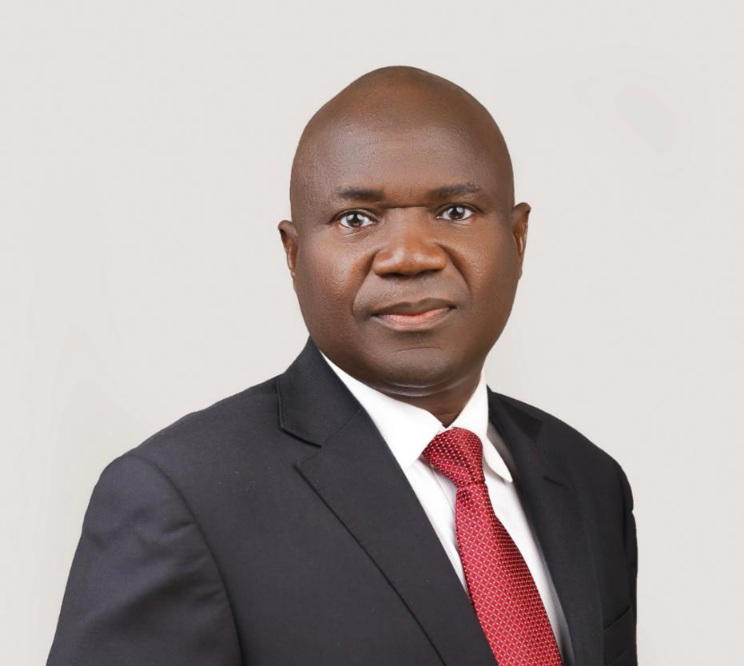 Non-interest banking appears to be gaining momentum in Nigeria’s financial landscape. In this interview with Emeka Anaeto, Business Editor of Vanguard Newspaper, the Managing Director of Summit Bank Limited, Dr. Sirajo Salisu, gave insight into the operations in the sub-sector as well as what his organization is bringing to the table.
Excerpts. Licensed in February 2025 and starting operations in July 2025, what has the experience been like so far? It is really challenging, but encouraging. It is encouraging in the sense that technology has changed almost everything. So even if you have a banking license, you have to begin to think of it as being a regular bank and a digital platform also, because that technology is now the key thing. As we are getting set to provide the banking services – the usual financing and the usual projects – we also have to be ready to go digital so that we can reach out to as many people as possible instead of spending much money building branches. Most Nigerians are yet to have clear understanding or knowledge of what a non-interest bank is. How do you explain this to a layman? How is a non-interest bank different from other banks? The conventional banking system has been around for more than 100 years, and everybody is used to the word interest. How much is your bank charging you? That is interest. How much is your bank paying you? That is interest. Now, when you come with a terminology called non-interest, people will tend to think you are referring to an NGO or a non-profit system. This is because they are used to that word interest, and now you are talking about non-interest. People tend to assume it is going to be a free business. You go and collect N1m, you do your business, take your profit and return the same N1m, then, definitely that bank will not open its door for business after a while. So, the financial consequences to the customer is the same whether in non-interest or conventional banking. The difference lies in the process. Non-interest bank normally charges based on profitability. You take N1m, you do a business, you earn a profit of N300,000, you are going to share that profit with that non-interest bank. It is profit-sharing. However, when people hear profit sharing, they always become very skeptical, thinking as if it is 50-50, not knowing 90-10 is sharing, and 95-5 is also sharing. So, when you share profit with non-interest bank, it is not usually a 50-50 thing. If you set up your business, you have your staff, you have your office, you get to pay all your administrative expenses. So, if you do a business because you collected N1m from us and you earn a profit of N300,000, and we say, take N150,000 and give us N150,000, then there is no fairness, because you are also dealing with so many other expenses. So probably out of the N300,000 profit, a non-interest bank will say, give me N70,000 or give me N50,000 depending also on the number of steps taken in the funding. So that is the notion of non-interest. But if you would go deeper to even call it Islamic banking, that is even more confusing, in the sense that either deliberately or religiously, people would assume Islamic Bank is only for Muslims. A non-Muslim can actually be a shareholder or even the single owner of an Islamic Bank, because Islamic banking is just a commercial bank doing business based on Sharia principles. A non-Muslim can also be a customer of an Islamic bank. A non-Muslim can be an employee of a non-interest or an Islamic bank. So whichever name you call it – non-interest, Islamic, or ethical bank – the moment you keep the sentiment aside, you have a very good understanding of how it works. It is called non-interest banking because we do profit sharing. It is called Islamic banking because we do profit sharing, not because of anything Islamic. It is called ethical banking because it is transparent and fair. In conventional banking, interest applies to credit and deposit. You have explained the non-interest concept on the credit side, but can we know of the deposit side? When you keep your deposit with a non-interest bank, you are not getting interest payment, but you will share from the bank’s profit, in other words profit sharing also applies. The money we lent out does not belong to us. The depositors or the owners of the money will also share in the same profit. When you keep your fixed deposit account for N1m and by end of the month, we do the calculation and see what we have, then we will also share with the customers, the depositors. In a conventional bank, when you keep a fixed deposit, they may give you 5% or 2% or 10% or 7% or whatever percentage. But in a non-interest bank, at the end of the month, whatever profit is realised will be shared with the deposit customers. We are also being very competitive. So, when we see a conventional bank can give you 5% of your fixed deposit, for instance, we can do our calculation for profit sharing that will attract you, and give you 7.5%, for instance. All of these can be translated into the same interest rate. That is why the best way to approach this is to use technology so that we can reach out to as many people as possible to enable them believe in the banking system. They trust the banking system and they do business with the banking system. They learn how to keep their money in the banking system. At this level, we are all one, encouraging or propagating the financial revolution. For me, we are propagating the general financial inclusion. However, at Summit Bank, we are targeting business people to bring them into the system, and where the competition is tight, we bring the advantage of a non-interest bank. So even where somebody has an account elsewhere, you can see them tending towards non-interest banking. And I am saying this with all sense of record. It is amazing to you to see the number of non-Muslims that are patronising the non interest banking; we are all very proud of it. And people are testifying. As the latest entrant into the non-interest banking sub-sector, what difference are you going to make? The first thing we did is to look for the best hands from the sector, and Summit Bank now came up with a very unique team that is very professional, very educated and very committed to doing the business with our customers as partners. So, one thing that we are bringing on board is the enhancement of professionalism. The second is that we bring customer value proposition to the table. If it is about looking for those who will open accounts, people already have five to six accounts in other banks. We sell the advantages of doing business with Summit Bank. If you are into importation, we give you some financial advice where you can see increase in profitability. If you are into export, we give you ideas of how to improve your export business. If you are into local buying and selling, we approach you from that business point of view, not from the point of view of common open account. This is one thing that we are doing differently, trying to add value to our customers, enabling partnerships with customers’ businesses. From your response, one can see a form of partnership between Summit Bank and the customers by way of offering advisory services. Do you charge for the advisory services? Indirectly, because when you make profit, we earn from it; and when your profit increases, our share also increases. From the point of view of transparency, the burden of charges, and customer complaints, what form of transparency and integrity model are you putting in place to help businesses, and indirectly, the economy, grow? Like I said, we are trying to protect the entire banking system. So even when people say there are hidden charges in your conventional banking, like you borrow N10,000 and tomorrow it is N15,000, we say there is nothing like hidden charges. All the charges that will make your N10,000 move to N15,000 were actually communicated in your offer letter. It is either somebody did not take time to read or did not want to read. However, what makes non-interest banking a little bit attractive and very specific is that we do not finance luxury. We finance business. If you are coming to a conventional bank to borrow N1m to pay you back in two months, they will give you. Whatever you do, whether profitable or not profitable, after two months, you have to pay back with the interest. In a non-interest bank, you do not just take the money, but you have to be very specific. That is where the transparency comes in. If you ask for N1m to buy 15 laptops which you will sell for a profit of N300,000, we are not going to give you the money directly. You will look for where you will buy the laptops. We will buy the laptops and deliver the laptops to you and wait for you to sell them. We share the profit. That is one difference. We will not give you money, but we will buy what you say you will buy. If you say you are going to sell it in 10 days, we are going to monitor you to make sure that you sell in 10 days. However, because of the flexibility of the conventional banking system, you may approach a conventional bank to take N1m. After getting the money, you say that a friend told you that there is big money in selling rams, especially during festive periods. Then you take the money and buy rams. You do not know anything about the business of ram. You only hear that people make profit, and before you know it, the money gets wiped out, and you have to pay back the loan. In a non-interest bank, a customer does not have the single room to do that diversion. You have to buy what you say you will buy, that is one. The second thing that makes it transparent is when we are going to share the profit with you. We will propose 90-10 or 80-20. You have to do your calculation. You sign and we keep reminding you that this is what you are going to pay to us. Even if it turns out that your business made more profit than expected, the agreed profit sharing will not change. Even if the prevailing interest rate goes up or down, a transaction consummated in a non-interest bank will still adhere to the same profit-sharing agreement. Even if you are going to make double or three times the profit, our agreement will never change. So these are some of the transparency matters that show up when we talk about the difference between a non-interest bank and a conventional bank. But there is nothing hidden, and we believe in contractual agreement. So, whatever we agree on is what we are going to do. From an industry point of view, and from your personal experience, can you highlight some of those challenges you encountered in the journey to setting up a non-interest bank and you navigate them? We consciously went for a non-interest banking license knowing fully well that the challenges are there. Challenge number one is that some people are deliberately or ignorantly misguiding others. “Don’t go to a non-interest. Don’t go to Islamic banking. You are not a Muslim.” We feel there is a limit to which all this misguided information will last. And gradually, people are beginning to understand that non-interest banking is just a model of doing business, nothing more. People are beginning to understand it. Number two, from the point of view of regulators, we are also getting a very positive advancement. The regulators are now becoming more professional in their understanding of the way the system works. And anybody coming to play inthe space now will find it a little bit easier with regulations in terms of platforms and instruments to do business. Those people that were in the non interest banking 10 years ago had little or no financial instruments to play with. Today there arelots of financial instruments. These are some of the things that give us encouragement. Conventional banking has been around for almost 150 years. People are used to it. Naturally, people will wonder what they stand to gain from something new. Which flavour do have that is different from yesterday’s flavour? This also encourages us to come and play in the non-interest banking space. Another thing is the rate at which non-interest bank is growing. Globally, it is moving a little bit faster than the conventional bank because the conventional space appears saturated, people are used to it. The non-interest banking space is now growing. Look back 20 years,for instance, what was growing in the Nigerian banking industry was merchant banking. At that time, merchant banking was what was new in the industry. These are the reasons why we feel we can continue to push non-interest banking. And lastly, and most importantly, non-interest banking appears to be a lot more developmental. This is so because in non-interest banking, you are dealing per cycle. I give you money. You buy something or do business.We do one cycle. We share profit. Then we go to the second cycle. We go to the third cycle. Unlike a conventional banking where I give you money and tell you I will charge you 30% per annum, whatever you do with that money, I am only interested in my earning me per annum based on what I charged. But because here we do cycles, it is more developmental, more active, and more transactional. This also makes it profitable. This is an interesting angle. What are your thoughts about the non-interest banking space also getting saturated? Even though nothing tends to infinity, let us look at it in terms of cycles. So far as that cycle keeps moving, you may not see the end of the cycle unless something happens to cut the circle. If you are tired of running the cycles and you drop out of the cycle, someone else will enter a new cycle, and you see that it keeps rotating. So, if actually we do the non-interest banking financing, that cycle will not stop, because it is part of day-to-day life. Wherever you have two or three people, business transaction has to go on. That gives you cycles. Let us talk about the global phenomenon called sustainability. Do you think non-interest banking offers serious sustainability in the services it delivers than every other financial service? Non-interest banking is the best form of banking that encourages sustainability. Anything that is harmful to the society will not be supported by non-interest banking. A non-interest bank will not even encourage you financially to go into anything harmful to the society. For instance, if someone living in a typical residential environment comes to us with a poultry proposal to do poultry inside his house, because that is the only available place he has, we will go there and assess the place. Even though giving him money will help him achieve financial independence, if we discover that the business will be harmful to his neighbours, we are not going to finance it because that kind of business is against our policy on sustainability. The same thing with certain kinds of mining business. If it will bring a lot of environmental degradation and, therefore, a lot of problems to the society, we will not finance it. We guard our sustainability policies very professionally. Profit will not motivate us if the business will be harmful to the society. How did you get into non interest banking? What has been your professional journey? What are your personal motivations and things that have inspired you to where you are today? All my life, since after graduation, I have been a banker, and that is why, when I am talking, I always protect the integrity of the entire banking industry, regardless of whether it is conventional or it is non-interest. But in terms of doing business, I am now into non-interest banking. I started my banking career since 1992, and I had the opportunity to stayin one bank for 20+ years, up until the time of consolidation. I started at Inland Bank. It later became First Inland Bank, and then Finbank, before becoming part of FCMB. So up to the level of that FCMB, I used to work with that bank. But in 2009,the bank had the opportunity to invest in Gambia,with 70% stake, and the position of MD was advertised. Somehow and through the privilege of God, I became the MD of Arab Gambian Islamic Bank, where I served for six years. Being a bank MD at an age below 40 years, with all the challenges, really gave me an opportunity to understand life and the business of banking. It happened to be a non-interest bank. At that time, there was no non-interest bank yet in Nigeria. The first one, Jaiz Bank, came in 2011 so when I returned to Nigeria in 2016, I joined them. Not minding that I have been MD in another bank for six years, and I resumed as a regional manager. A lot of people were surprised but that is planning and that is life. In that bank, I moved from regional manager to chief risk officer, executive director, and eventually, the MD/CEO of the bank. In2024, the Summit Bank opportunity came and I am here now. I saw a great team – people passionate about trying new and innovative things. In terms of education, my friends used to call me Made in Nigeria. Made in Nigeria in the sense that I did my first degree in Bayero University, Kano. I did my master’s degree in University of Port Harcourt. I started my PhD in University of Nigeria, Nsukka, but I ended up in Abubakar Tafawa Balewa University, Bauchi, where I completed my PhD. |
| Vanguard Business News |
|
Dangote Cement revenue hits N4.31trn as profit tops N1trn Dangote Cement Plc has reported a 20.3 per cent revenue growth to N4.31 trillion for the year ended Dec. 31, 2025. |
|
NGX Group records N15.6bn profit, declares N3.00 dividend …Issues 1 for 3 bonus By Peter Egwuatu The Nigerian Exchange Group, NGX Group has the recorded N15.6 billion Profit Before Tax, PBT, in its audited results for the year ended 31 December 2025, up from N13.6 billion in the corresponding period 2024. The Exchange also declared N3.00 per share dividend and a bonus of one […] |
|
Dangote Refinery charts industrial future with surfactant plant By Providence Ayanfeoluwa Dangote Petroleum Refinery has announced plans to expand beyond crude processing into a fully integrated industrial hub, unveiling five major projects that aim to transform Africa’s manufacturing landscape. The project encompasses the ambitious expansion plan of a 400,000-tonne Linear Alkaline Benzene (LAB) plant to support detergent manufacturing across the continent. Addressing journalists during […] |
|
Oil Theft: How criminal networks are moving from creeks to communities For decades, Nigeria’s oil theft crisis was largely associated with remote creeks, mangrove swamps and offshore vandalism in the Niger Delta. Increasingly, however, security agencies say the trade is migrating inland-embedding itself within civilian communities, markets and transport corridors where it can operate under the cover of everyday commerce. The recent exposure of Owaza Mami Market […] |
|
FG extends ban on Shea nut export to boost domestic processing By Peter Egwuatu, with agency report The Federal Government has extended its ban on Shea nut exports by a year, reinforcing a drive to curb raw commodity shipments and boost local value addition. The extension takes effect from February 26, 2026, to February 25, 2027. Approving the ban, President Bola Tinubu said that Nigeria is trying to […] |
|
Lafarge Africa revenue surges 53% to N1.1trn By Peter Egwuatu Lafarge Africa Plc has announced a revenue milestone of N1.1 trillion in 2025, representing a 53% surge from N696.8 billion recorded in the corresponding period of 2024. Profit After Tax (PAT) rose from N100.1 billion in 2024 to N273 billion representing a 173% increase. The company said this performance is underpinned by volume-led […] |