 |
 |
| << Back Poser >> |
| Mental resilience in banking: Maintaining cognitive balance in high-stress financial decisions |
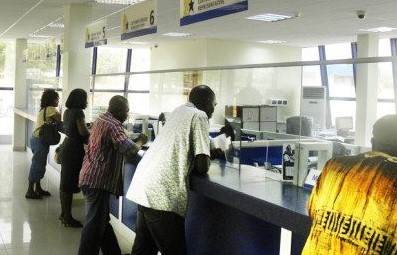 Banking is often seen as a numbers game—figures on screens, reports, projections, and targets.
But, behind every loan approval, treasury trade, risk assessment, or customer decision is a human mind working under pressure. Responsibilities In Ghana’s fast-evolving financial sector, bankers are required to think clearly and act decisively in environments shaped by regulatory demands, economic uncertainty, digital transformation, and intense performance expectations. Mental resilience has therefore become not just a personal asset, but a professional necessity. The reality of stress in Ghana’s Banking sector Ghana’s banking industry has experienced significant changes over the past decade. From sector clean-ups and stricter regulatory oversight by the Bank of Ghana to heightened competition and the rise of fintechs, professionals in the industry are constantly adapting. These changes, while strengthening the system, have increased cognitive and emotional demands on bankers at all levels. Business teams juggle ambitious deposit targets with client expectations. Credit officers balance risk prudence against business growth pressures. Operations and compliance teams work against tight deadlines, knowing that a single oversight can carry serious consequences. Senior executives make decisions that affect not just balance sheets, but livelihoods. In such an environment, sustained stress can quietly erode judgment, focus, and emotional stability. Why mental resilience matters in financial decision-making Mental resilience is the ability to remain psychologically steady, focused, and adaptable in the face of pressure. In banking, this directly influences decision quality. High stress levels can narrow thinking, encourage impulsive actions, and increase the likelihood of errors. Over time, chronic stress may also lead to burnout, anxiety, and disengagement—conditions that undermine both individual performance and institutional integrity. Conversely, resilient professionals are better equipped to pause, assess situations objectively, and make balanced decisions even when stakes are high. They are more likely to manage uncertainty calmly, communicate effectively with colleagues and clients, and recover quickly from setbacks. Cognitive balance: The banker’s hidden advantage Cognitive balance refers to the ability to align rational analysis with emotional awareness. In practice, this means understanding data and risk models while also recognizing how emotions, fear, pressure, and overconfidence can influence judgment. For instance, during periods of economic volatility, such as inflationary pressures or currency fluctuations, bankers may feel compelled to act hastily to protect portfolios or meet targets. Cognitive balance allows professionals to acknowledge that pressure without letting it dictate decisions. It creates space for thoughtful analysis, peer consultation, and adherence to sound risk principles. In Ghana, where personal relationships often intersect with professional dealings, maintaining this balance is especially important. Decisions involving clients who are friends, family members, or long-standing community figures require emotional intelligence as much as technical competence. Building mental resilience in practice Mental resilience is not an abstract concept; it is built through deliberate habits and supportive environments. Structured stress management Simple practices such as short breaks during intense workdays, controlled breathing, and realistic workload planning can significantly reduce mental fatigue. Banks that encourage reasonable work hours and discourage a culture of constant urgency help employees sustain clarity over time. Continuous learning and confidence building Uncertainty often fuels stress. Regular training on risk management, regulatory updates, and financial analysis strengthens professional confidence. When bankers feel competent and informed, they are less likely to panic under pressure. Supportive leadership and open dialogue Leadership plays a critical role in shaping resilience. Managers who promote open communication, allow questions, and acknowledge challenges create psychological safety. In such environments, employees are more likely to seek guidance before problems escalate. Personal boundaries and wellbeing Outside the office, maintaining strong family ties, community involvement, faith, and physical wellbeing—values deeply rooted in Ghanaian culture—helps professionals recharge mentally. A banker who is well-rested and emotionally grounded brings better judgment to the workplace. Institutional responsibility and the way forward While individual effort matters, mental resilience should not be treated solely as a personal responsibility. Financial institutions must recognize that employee wellbeing is directly linked to risk management and performance. Integrating wellness programmes, access to counselling services, and leadership training focused on emotional intelligence can strengthen organizational resilience as a whole. As Ghana positions itself as a financial hub in West Africa, the quality of decisions made within its banks will remain critical. Strong systems and regulations are essential, but they must be matched by mentally resilient professionals who can navigate complexity without losing balance. Conclusion Banking will always involve pressure. High-stakes decisions are part of the profession’s DNA. However, the ability to maintain cognitive balance under stress is what separates sustainable performance from costly mistakes. In the Ghanaian banking context, where economic, social, and regulatory factors intersect, mental resilience is no longer optional. It is a quiet strength—one that protects both the banker and the institution and ultimately contributes to a more stable and trustworthy financial system. By Nancy Evelyn Korkor Oheneba-Dornyo Source: GNA |
| Ghana Business News |
|
Decline in textile sector persists as GDP contribution falls 3.6% in 2yrs By Yinka Kolawole Activities in Nigeria’s cotton, textile and garment industry continued to trend downward in 2025, with the industry’s contribution to the nation’s Gross Domestic Product, GDP, declining to N4.384 trillion, reflecting persistent structural challenges confronting the sector. Data from the National Bureau of Statistics (NBS) shows that the sector’s output has recorded a steady […] |
|
30 banks meet CBN recapitalisation requirements The Central Bank of Nigeria (CBN) has disclosed that 30 banks have met the revised minimum capital requirements under its ongoing recapitalisation programme. |
|
Manufacturing VAT surges 54.7% to N875bn in 9 months …Surpasses 2023 full-year figure By Yinka Kolawole The contribution of Nigeria’s manufacturing sector to Value Added Tax (VAT) in 2025 significantly increased with payments rising to N875.420 billion in the first nine months of the year (9M’25), surpassing both the N566.011 billion recorded in the corresponding period of 2024 (9M’24) and the N578.394 billion generated in […] |
|
Nigeria’s non-oil exports to EU lag at 10% despite $21.87bn trade— NEPC By Progress Godfrey The Nigerian Export promotion Council (NEPC) has urged agro-exporters to tap the European Union’s over 400 million-strong consumer market, warning that non-oil exports account for only 10 percent of total trade with the bloc despite a $21.87 billion trade volume in 2024. Executive Director and CEO of NEPC, Mrs Nonye Ayeni, made the […] |
|
Vitafoam shareholders endorse N3.75 bn dividend, bonus shares Shareholders of Vitafoam Nigeria Plc , have approved a N125 million capital injection through a bonus share issue and endorsed a N3.75 billion dividend payout, signalling strong investor confidence in the company’s improving financial performance. |
|
Dangote Refinery commits to energy stability amid global refineries shutdown By Udeme Akpan Dangote Petroleum Refinery & Petrochemicals has indicated its commitment to stabilising energy supply to Nigeria amid recent shocks in the international oil market. The ongoing conflict in the Middle East has led to the shutdown of some refineries and cuts in refinery production across the world, resulting in a global scarcity of petroleum […] |