 |
 |
| << Back Poser >> |
| Nigeria exits EU high-risk list, boosts investor confidence – Edun |
 *Says affordable food, jobs now focus of reforms
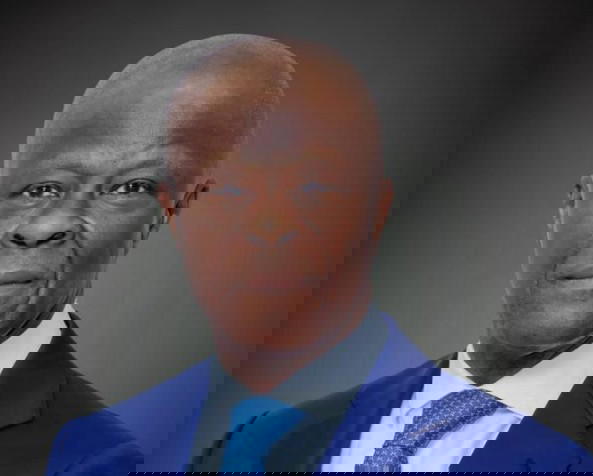
*Reforms eliminated distortions, level playing field for investors *Defends ₦152trn debt, cites transparency reforms By Babajide Komolafe Nigeria’s exit from the European Union’s high-risk third-country list is a major boost for investor confidence, the Coordinating Minister of the Economy and Minister of Finance, Mr. Wale Edun, has said, as the government moves to prioritise affordable food, housing, and job creation in the next phase of reforms. Speaking in Lagos yesterday at the NESG 2026 Macroeconomic Outlook Presentation, Edinburgh said: “Exiting the EU high-risk list is a landmark achievement for Nigeria,” Edun told the NESG 2026 Macroeconomic Outlook Presentation. “It sends a clear signal to investors that Nigeria is serious about maintaining a stable, credible, and transparent business environment.” On the government’s reform priorities, Edun said, “Our focus now is on ensuring that ordinary Nigerians feel the benefits of reform — through more affordable food, access to housing, and productive jobs.” He explained that these reforms were built on measures that eliminated distortions that had previously skewed the economy. “For too long, access to foreign exchange and subsidised petroleum products created an uneven playing field,” he said. “Those distortions are gone. Today, investors operate in a transparent environment where success is driven by productivity and innovation, not rent-seeking.” Edun also defended the ₦152 trillion public debt, stressing that recent adjustments reflected transparency reforms rather than new borrowing. “About ₦30 trillion previously off the books has now been fully recognised,” he said. “Dollar-denominated debt movements and exchange rate adjustments account for the remainder. These are not fresh borrowings; they are steps to improve fiscal accountability and transparency.” Highlighting fiscal and structural reforms, Edun said, “We have digitised revenue collection, deployed real-time treasury monitoring, and strengthened state-level financial positions. Many states now run budget surpluses exceeding three per cent, enabling expanded spending on health, education, and social services.” He said housing and food security were central to the government’s agenda. “Mortgages are now being issued at less than ten per cent interest,” Edun said. “We are also supporting farmers to boost productivity, reduce costs, and ensure that food is more affordable for all Nigerians.” Edun stressed the importance of youth and digital inclusion. “Half of Nigeria’s population is under 19 years old. We are investing in digital infrastructure, including 90,000 kilometres of fibre-optic networks, to empower young Nigerians to earn, innovate, and participate in global markets,” he said. He concluded, “2026 is a pivotal year. The challenge now is to consolidate our gains, maintain policy consistency, and ensure that stability translates into inclusive growth, jobs, and shared prosperity. Nigeria must not only stabilise, it must thrive.” |
| Vanguard Business News |
|
Dangote Cement revenue hits N4.31trn as profit tops N1trn Dangote Cement Plc has reported a 20.3 per cent revenue growth to N4.31 trillion for the year ended Dec. 31, 2025. |
|
NGX Group records N15.6bn profit, declares N3.00 dividend …Issues 1 for 3 bonus By Peter Egwuatu The Nigerian Exchange Group, NGX Group has the recorded N15.6 billion Profit Before Tax, PBT, in its audited results for the year ended 31 December 2025, up from N13.6 billion in the corresponding period 2024. The Exchange also declared N3.00 per share dividend and a bonus of one […] |
|
Dangote Refinery charts industrial future with surfactant plant By Providence Ayanfeoluwa Dangote Petroleum Refinery has announced plans to expand beyond crude processing into a fully integrated industrial hub, unveiling five major projects that aim to transform Africa’s manufacturing landscape. The project encompasses the ambitious expansion plan of a 400,000-tonne Linear Alkaline Benzene (LAB) plant to support detergent manufacturing across the continent. Addressing journalists during […] |
|
Oil Theft: How criminal networks are moving from creeks to communities For decades, Nigeria’s oil theft crisis was largely associated with remote creeks, mangrove swamps and offshore vandalism in the Niger Delta. Increasingly, however, security agencies say the trade is migrating inland-embedding itself within civilian communities, markets and transport corridors where it can operate under the cover of everyday commerce. The recent exposure of Owaza Mami Market […] |
|
FG extends ban on Shea nut export to boost domestic processing By Peter Egwuatu, with agency report The Federal Government has extended its ban on Shea nut exports by a year, reinforcing a drive to curb raw commodity shipments and boost local value addition. The extension takes effect from February 26, 2026, to February 25, 2027. Approving the ban, President Bola Tinubu said that Nigeria is trying to […] |
|
Lafarge Africa revenue surges 53% to N1.1trn By Peter Egwuatu Lafarge Africa Plc has announced a revenue milestone of N1.1 trillion in 2025, representing a 53% surge from N696.8 billion recorded in the corresponding period of 2024. Profit After Tax (PAT) rose from N100.1 billion in 2024 to N273 billion representing a 173% increase. The company said this performance is underpinned by volume-led […] |