 |
 |
| << Back Poser >> |
|
Food inflation still going up but at slower speed
Business |
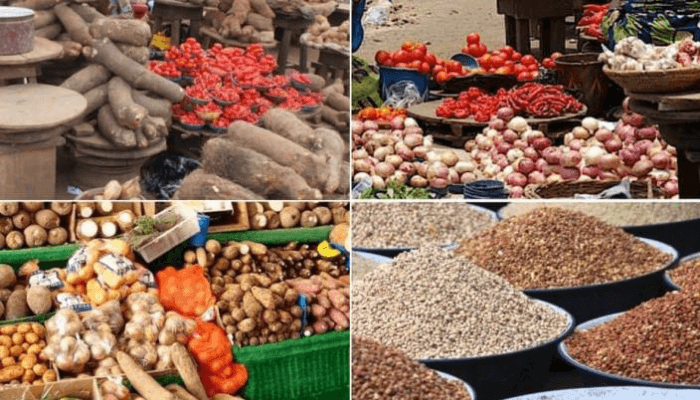 Contrary to the feelers in the public space hinting that prices of some food items are going down, the National Bureau of Statistics, NBS, has said that on the average, the prices were going higher in the month of October 2025 as against previous month of September.
But measured against October last year (annualized), the NBS said the prices last month were lower, adding however, that the lower index was due to the adjustment effected by the Bureau in the inflation metrics. However, the rate of increase in food prices has slowed, according to NBS. The NBS, in its October Consumer Price Index, CPI, report yesterday, stated: “The Food inflation rate in October 2025 was 13.12 percent on a year-on-year basis. This was 26.04 percentage points lower compared to the rate recorded in October 2024 (39.16 percent). “The significant decline in the annual food inflation figure is technically due to the change in the base year. However, on a month-on-month basis, the Food inflation rate in October 2025 was -0.37 percent, up by 1.21 percent compared to September 2025 (-1.57 percent). “The increase can be attributed to the rate of increase in the average prices of onions (Fresh), fruits (oranges, pineapple), shrimp, groundnuts (unshelled), vegetables (ugu, okazi leaf), and meat (goat meat, cow tail, liver), among others. “The ‘All items less farm produces and energy’ or Core inflation, which excludes the prices of volatile agricultural produces and energy, stood at 18.69 percent in October 2025 on a YoY basis, showing a decline of 9.68 percent when compared to the 28.37 percent recorded in October 2024.” According to NBS, food inflation on a YoY basis was highest in Ogun (20.85 percent), Nasarawa (19.96 percent), and Ekiti (19.7 percent), while Akwa Ibom (3.98 percent), Katsina (4.15 percent), and Yobe (4.29 percent) recorded the slowest rise in food inflation on a year-on-year basis. “On a month-on-month basis, how-ever, October 2025 food inflation was highest in Bauchi (6.77 percent), Abuja (5.11 percent), and Niger (4.84 percent), while Katsina (-7.72 percent), Oyo (-5.89 percent), and Taraba (-4.89 percent) recorded a decline in food inflation on a month-on-month basis.” Meanwhile, the NBS reported that headline inflation eased by 1.97 percentage points to 16.05 percent in October from 18.02 percent in September 2025. NBS stated: “In October 2025, the Headline inflation rate eased to 16.05 percent relative to the September 2025 headline inflation rate of 18.02 percent. “Looking at the movement, the October 2025 Headline inflation rate showed a decrease of 1.96 percent compared to the September 2025 Headline inflation rate. “On a year-on-year basis, the Headline inflation rate was 17.82 percent lower than the rate recorded in October 2024 (33.88 percent). “This shows that the headline inflation rate (Year-on-Year, YoY, basis) decreased in October 2025 compared to the same month in the preceding year (i.e., October 2024), though with a different base.” Commenting on the latest inflation figures, analysts at Afrinvest West Africa Limited stated: “The disinflation trend was driven by a sharp moderation in food inflation to 13.1 percent y/y (from 16.9 percent), supported by improved harvests and a firmer Naira, while core inflation also declined for the fourth month to 18.7 percent, the lowest since February 2023.” |
| Vanguard |
|
Naira depreciates to N1,362/$ in parallel market The Naira yesterday depreciated to N1,362 per dollar from N1,357 in the parallel market on Monday. |
|
West Africa must modernise agriculture for food security – Experts Experts have called for the urgent modernisation of agriculture across West Africa, stressing the need to move beyond increased production and focus on transforming agricultural value chains to ensure food security and improved nutrition amid growing climate and population pressures. |
|
Climate change threatens Nigeria’s food systems as farmers count losses ….experts call for urgent, sustainable measures to mitigate impacts By Gabriel Ewepu ABUJA — Nigeria’s food system is facing growing threats from climate change as erratic rainfall, prolonged dry spells, flooding, rising temperatures, pests and diseases disrupt farming activities, slash yields and leave farmers counting losses running into billions of Naira. The situation, according to […] |
|
World Bank: Fuel price to slow Nigeria’s poverty reduction •Says rising pre-election spending may derail reforms •Raises Nigeria’s 2026 growth forecast to 4.3% •Projects 15.7% inflation rate for 2026 •44% of firms in Nigeria, Kenya adopt AI, power constraints threaten gains By Babajide Komolafe, Economy Editor The World Bank has warned that elevated fuel prices could slow Nigeria’s poverty reduction efforts despite an expected […] |
|
Government releases GH¢9.1b covering six quarters of DACF to MMDAs – Ayariga Mr Mahama Ayariga, the Minister of Local Government, Chieftaincy and Religious Affairs, has announced government's release of GH¢9.1 billion, covering six quarters of the District Assemblies Common Fund (DACF) to Metropolitan, Municipal, and District Assemblies (MMDAs) nationwide. |
|
Cedi was worst African currency in quarter 2, 2026 – World Bank According to the World Bank, the escalation of the conflict in the Middle East initially exerted broad-based pressure on African currencies. |