 |
 |
| << Back Poser >> |
| Some residents in Keta express concern about SIM reregistration |
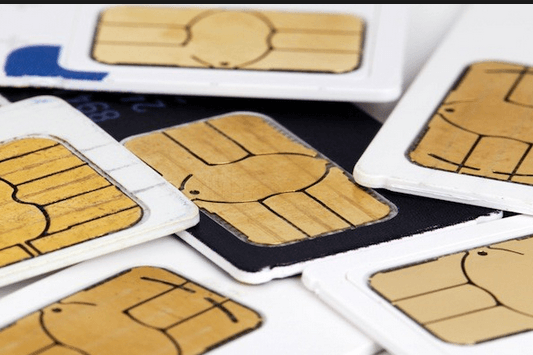 Some members of the public in Keta Municipality of the Volta Region have expressed mixed reactions over the proposed Subscriber Identity Module (SIM) card re-registration exercise.
While some residents in the area believed the move would help curb fraudsters’ activities, others have opposed to the move, citing concerns about data security and privacy, among others. Mr Selorm Augustine Hamenu, a resident of Vodza, in the Keta Municipality, told the Ghana News Agency, in an interview that the moves by the government were to re-register SIM cards to enhance national security, reduce fraudulent activities, and improve industry regulation. “What l understand is that the exercise, which is expected to start soon, will enable all citizens have the opportunity to re-register their SIM cards using the Ghana Card, this will curb a lot of fraudulent activities by some fraudsters,” he said. He said that many other residents in Keta and its surrounding areas have welcomed the initiative which would reduce cybercrime, mobile money fraud, and others, adding that, “this is a good move which will help us secure our phones and reduce the number of scam calls we receive.” However, others were skeptical about the ability of the government to protect their data with some residents expressing worry about their data securities falling into wrong hands which could harm them afterwards. Madam Dzifa Tetevi, a seamstress at Tetekope, a suburb of Keta, also stated that the previous SIM registration exercise conducted faced challenges, including low registration rates and data security concerns and urged government to provide alternative solutions to address such issues with the new exercise. “My concern is about the potential risks of biometric data being stored by private telecommunications companies, biometric data is the currency of identity in the digital age, and we need to ensure that it is protected well to avoid any unfortunate situation.” She said that the government should engage with the public thoroughly and provided all the necessary education needed before enrolling the programme to address concerns and ensure a smooth registration process to gain the trust of citizens and achieve its goals. She lamented and questioned about how 2 million or more Ghanaians would be re-registered and how the exercise would be conducted to capture every single SIM card and argued that what could happen to anyone who would not be able to re-register his or her SIM. “What are the criteria for the re-registration exercise, how can they register my grandfather in my village, are they going to do it through the social media, these and many more questions we are looking forward to understand.” Mr. Samuel Nartey George, the Minister of Communication, Digital Technology, and Innovations, had earlier promised that the exercise would be a queue-free, smooth, and successful exercise. The National Communications Authority (NCA) has also outlined the registration process, which involves submitting Ghana Card details via a Short Code or online portal, while the process would also verify citizen information and link SIM cards to individual Ghana Cards. Some experts also argue that the re-registration exercise was necessary to combat mobile-related fraud and cybercrime with registered SIMs expected to enable authorities to trace criminals using mobile networks for scams and other crimes. The government has emphasised that the exercise would be mandatory and urged citizens to register their SIM cards when the time comes to avoid disruptions to their services. Source: GNA |
| Ghana Business News |
|
Tariff crisis: Shipping firms move to shut down operations, job loss looms The Nigerian Shippers’ Council approved the increase in shipping charges after a due process spanning over two years, culminating in final authorisation for carriers to implement the adjustment. |
|
Accra court convicts 106 foreigners for illegal entry into Ghana An Accra Circuit Court has sentenced 106 persons to prison terms for entering Ghana illegally. |
|
Nigeria’s Balance of Payment falls 38% to $4.23bn in 2025 •Crude oil exports decline 14.41% to $31.54bn •Foreign portfolio investments down 48.3% to $8.04 •Current account surplus falls 26% By Babajide Komolafe, Economy Editor and Elizabeth Adegbesan Nigeria’s external sector faced significant headwinds in 2025, as the country’s overall Balance of Payments (BOP) surplus plummeted by 38.1 per cent to $4.23 billion, down from the $6.83 […] |
|
Electricity woes worsen as DisCos record N2.4trn in financial losses •Rising debt restricts power generation •Consumers slam DisCos for non-transparency, demand mass metering •Operators knock Presidency over exit from national grid By Obas Esiedesa At the backdrop of worsening power supply to offices and homes, Electricity Distribution Companies (DisCos) have recorded a combined loss of N2.349 trillion over the past two years due to billing and collection […] |
|
Nigeria’s financial reforms have strengthened shock resistance, investor confidence — CBN By Babajide Komolafe Governor of the Central/ Bank/ of/ Nigeria (CBN), Mr./ Olayemi/ Cardoso, has said that Nigeria’s recent monetary and financial-sector reforms have built a stronger capacity to withstand external shocks and restored confidence in the economy. Speaking at the Africa/ Capital/ Forum in London on Tuesday on the sidelines of President/ Bola/ Ahmed/ Tinubu’s […] |
|
UBA, NiDCOM deepen collaboration to unlock diaspora capital United Bank for Africa (UBA) Plc, has reiterated its commitment towards building tangible economic bridges and strengthening diaspora-driven investment into Nigeria. UBA’s Group Managing Director/Chief Executive Officer, Oliver Alawuba, stated this while hosting representatives of the Nigerians in Diaspora Commission (NiDCOM) led by its Chairman/CEO, Hon. Abike Dabiri, at the bank’s UK office earlier in the […] |