 |
 |
| << Back Poser >> |
| Over 100 imported vegetable oil brands dominating local market despite ban — Ikoro |
 ….Accuses Customs, NAFDAC, SON of enforcement failure
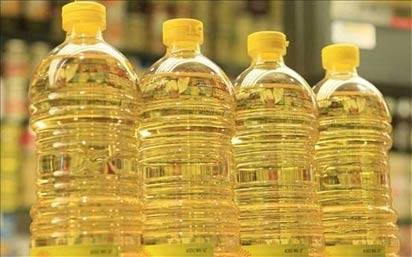
By Cynthia Alo Despite the retention of vegetable oil on the Federal Government’s prohibition list under the 2026 fiscal policy measures, the National Chairman of the Vegetable/Edible Oil Producers Association of Nigeria (VEOPAN), Okey Ikoro, said the local market is still dominated by more than 100 imported oil brands, warning this threatens investments and discourages backward integration in the sector. Speaking on Arise News, Ikoro disclosed that association members intercepted three trailers two days ago transporting smuggled vegetable oil through the Badagry axis. Ikoro, while reviewing the effect of the 2026 fiscal policy measures on the vegetable oil sector of the Nigerian economy, accused the Nigeria Customs Service, National Agency for Food and Drug Administration and Control (NAFDAC), and the Standards Organisation of Nigeria, (SON) of failing to enforce ban. He said: “The 2023 fiscal policy definitely placed vegetable oil under prohibition and a lot of milestones were gained because it was a long-time policy from 2023 to 2026. A lot of companies went into backward integration, huge companies like Okomu, Presco, and PZ Wilmar, all of them went into major expansion because the policy gave protection to the industry. “But two years later, entering 2024 and 2025, there was a total collapse of implementation on the side of the agencies that were supposed to monitor the fiscal policy, especially in the area of prohibition of items. We noticed that the markets were flooded with imported vegetable oil despite the fact that the item was under prohibition. If you go into the local market, you will see more than 100 brands of vegetable oil coming in from outside the country, in yellow jerry cans with funny labels. Nobody is monitoring. NAFDAC is not doing its job. “This resulted in a lot of losses and setback to the companies. Companies would have borrowed huge sums of money to put into their backward integration because oil palm is a long gestation investment. Before you can start getting returns, it takes a minimum of five years. He questioned the quality and safety of the imported products saying, “All the vegetable oils produced in Nigeria are regulated. NAFDAC visits the factories regularly and tests the products to ensure they meet fortification and quality standards. But the imported oil just comes in and nobody is monitoring it. They do not carry NAFDAC numbers or labels, yet they are all over the market.” |
| Vanguard Business News |
|
Nigeria’s economic recalibration good for business — Jumia CEO By Etop Ekanem Chief Executive Officer of Jumia Group, Francis Dufay, has offered a perspective that placed Nigeria not at the margins of risk, but at the centre of reform, growth and stability. Speaking during a panel on emerging markets, at the Sohn Conference in New York, Dufay described the period between 2021 and 2024 as […] |
|
Dangote Refinery reduces petrol price to N1,250/litre Dangote Refinery has reduced the gantry price of petrol, to N1,250 per litre from N1,275 per litre, representing a two per cent decrease. |
|
Over 100 imported vegetable oil brands dominating local market despite ban — Ikoro ….Accuses Customs, NAFDAC, SON of enforcement failure By Cynthia Alo Despite the retention of vegetable oil on the Federal Government’s prohibition list under the 2026 fiscal policy measures, the National Chairman of the Vegetable/Edible Oil Producers Association of Nigeria (VEOPAN), Okey Ikoro, said the local market is still dominated by more than 100 imported oil brands, […] |
|
India turns to Nigeria, other African countries for Soybeans By Cynthia Alo, with Agency report India has turned to Nigeria and other African countries for soybean imports after soaring domestic prices forced Indian traders to cancel soymeal export contracts for the first time since 2021. According to a Reuters report, Indian traders cancelled about 25,000 metric tons of soymeal export contracts and secured about 80,000 […] |
|
ITAS implementation will not introduce new taxes – GRA assures businesses Mr Anthony Kwasi Sarpong The Commissioner-General of the Ghana Revenue Authority (GRA), has assured the business community that the introduction of the Integrated Tax Administration System (ITAS) will not lead to the imposition of new taxes. |
|
CBN unveils new FX guidelines, approves cash movement of $50,000 By Emma Ujah, Abuja Bureau Chief The Central Bank of Nigeria (CBN) has issued fresh Foreign Exchange Guidelines which provides that an individual can move cash of up to $50,000, but must be declared at the point of exit. The bank also retained the earlier provision for the movement or import of cash of up to […] |