 |
 |
| << Back Poser >> |
| ECOWAS endorses Nigeria-Morocco gas pipeline framework |
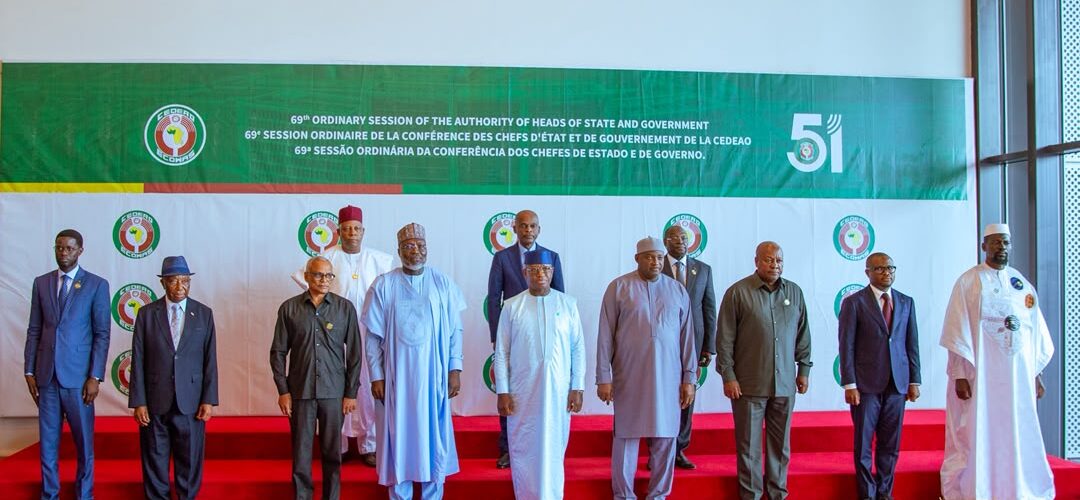 ECOWAS presidents,
Heads of State and Government of the Economic Community of West African States (ECOWAS) have endorsed the legal and institutional framework for the Nigeria-Morocco African Atlantic Gas Pipeline, marking a major step towards the realization of one of Africa’s largest energy infrastructure projects. The endorsement followed the signing of an intergovernmental agreement during an ECOWAS Summit in Freetown on Sunday, providing broader regional political support for the proposed 6,800-kilometre pipeline that will transport Nigerian natural gas along Africa’s Atlantic coast to Morocco, with the potential to supply European markets. The project, initiated by Morocco’s King Mohammed VI and former Nigerian President Muhammadu Buhari in 2016, is increasingly being viewed as a regional integration initiative rather than a purely bilateral venture between Morocco and Nigeria. The agreement formalises the participation of ECOWAS member states in the project’s legal and governance framework, paving the way for the next phase of implementation. The pipeline is being jointly developed by Morocco’s National Office of Hydrocarbons and Mines (ONHYM) and the Nigerian National Petroleum Company Limited (NNPC Ltd.), with continued backing from Nigerian President Bola Ahmed Tinubu. Officials say the project forms part of King Mohammed VI’s broader vision of promoting African economic integration through strategic infrastructure, regional connectivity and South-South cooperation. Although Morocco is not a member of ECOWAS, it participated in the Freetown ceremony as one of the project’s founding partners. A separate signing ceremony involving Morocco, Nigeria and Mauritania is expected to be held in Morocco in the coming months. Mauritania, which is also outside ECOWAS, is considered a key transit country along the proposed route. That meeting is expected to focus on the establishment of the project’s management and operational structures. Under current plans, a dedicated project company will be established in Casablanca, while a Pipeline Higher Authority will be headquartered in Abuja to oversee regulatory, operational and financial matters. The two bodies are expected to coordinate engagement among participating governments, national energy companies, investors and international financial institutions. Project partners say major technical, environmental and engineering studies have already been completed, allowing preparations to advance towards implementation and financing. The pipeline is expected to pass through 13 countries along Africa’s Atlantic coastline before linking with the existing Maghreb-Europe Gas Pipeline network in Morocco. It is projected to transport about 30 billion cubic metres of natural gas annually, with up to 15 billion cubic metres potentially destined for Morocco and European markets, while the remainder would serve participating West African countries. The project is estimated to cost about US$25 billion, with initial sections potentially becoming operational during the early years of the next decade, subject to financing, regulatory approvals and completion of technical preparations. Observers believe the pipeline could significantly strengthen energy security across West Africa by improving access to natural gas for electricity generation and industrial development. Several countries along the route continue to face energy shortages and high production costs, making expanded access to natural gas a potentially important driver of economic growth. Supporters also argue that the project could promote industrialisation, create jobs and encourage the development of domestic gas resources by connecting producing countries to a regional transmission network. The Morocco-Nigeria partnership remains at the centre of the initiative, combining Nigeria’s vast natural gas reserves with Morocco’s strategic location and infrastructure expertise. The project forms part of a wider Atlantic development strategy championed by King Mohammed VI, aimed at strengthening trade, transport and energy links across Africa’s Atlantic corridor and improving access to international markets. With the endorsement of the intergovernmental agreement in Freetown, the African Atlantic Gas Pipeline has moved beyond its original bilateral framework and is increasingly emerging as a regional West African development project with significant implications for energy security, economic integration and industrial growth across the continent. Source: GNA |
| Ghana Business News |
|
ECOWAS endorses Nigeria-Morocco gas pipeline framework Heads of State and Government of the Economic Community of West African States (ECOWAS) have endorsed the legal and institutional framework for the Nigeria-Morocco African Atlantic Gas Pipeline, marking a major step towards the realization of one of Africa’s largest energy infrastructure projects. |
|
Drug trafficking through ports threatens Nigeria’s trade reputation, economy — Report By Providence Ayanfeoluwa Nigeria’s growing exposure to drug trafficking through its seaports is posing a serious threat to the country’s international trade reputation, economic competitiveness and investment prospects, the Sea Empowerment & Research Center (SEREC) has warned. In its July 2026 Policy Bulletin released yesterday, SEREC said the persistent use of Nigerian seaports as transit routes […] |
|
Dangote Refinery ramps up fuel exports as crude shortages, forex squeeze bite By UdemeAkpan, Energy Editor The Dangote Petroleum Refinery has significantly increased exports of refined petroleum products as inadequate domestic crude oil supply and persistent foreign exchange constraints continue to hamper its operations. This comes as rising global crude oil prices are expected to increase feedstock costs for the 650,000-barrels-per-day refinery, although stronger prices for refined petroleum […] |
|
External reserves stand at $52bn – CBN gov, Cardoso The Governor of the Central Bank of Nigeria (CBN), Yemi Cardoso, says Nigeria’s foreign exchange reserves has presently risen to 52.52 billion dollars. |
|
Ghana government to introduce cohort-based learning assessment model The Ghana government will introduce a cohort-based learning assessment model to track pupils’ academic progress throughout their basic education, Mr Haruna Iddrisu, Education Minister has said. |
|
FGN bonds attract N1.74trn, records 45% oversubscription By Elizabeth Adegbesan The Federal Government of Nigeria (FGN) bond auction in July 2026 was oversubscribed by 45 percent, or N540 billion, attracting total subscriptions of N1.74 trillion against the N1.2 trillion offered by the Debt Management Office (DMO). This reflects strong investor demand for Federal Government of Nigeria (FGN) debt instruments. According to the July […] |