 |
 |
| << Back Poser >> |
| FG moves to clear Apapa, Tin Can Port corridors |
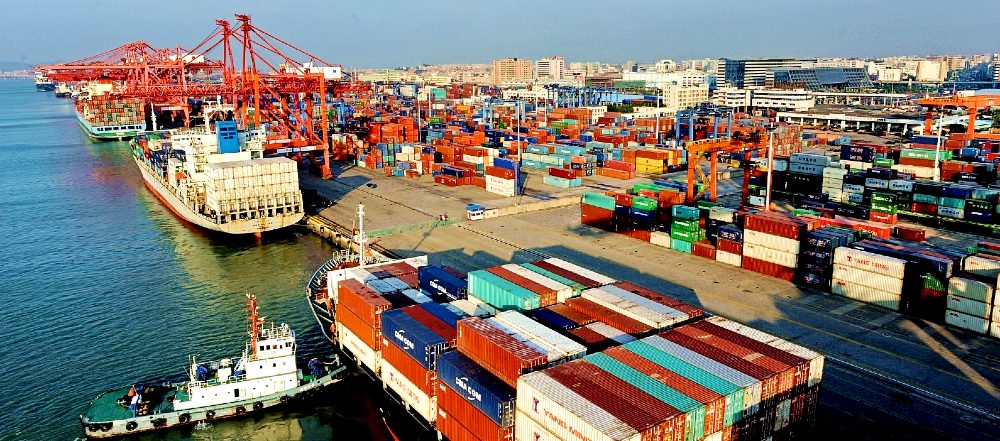 The Presidential Enabling Business Environment Council, PEBEC, has announced plans to commence a two-day clean-up and enforcement exercise along the Lagos port corridors as part of efforts to improve trade facilitation and enhance efficiency at the nation’s seaports.
The operation, scheduled for May 14 and 15, 2026, will be carried out through PEBEC’s Ports and Customs Efficiency Committee, PCEC, and is aimed at restoring order within the Apapa and Tin Can port corridors, regarded as critical maritime and logistics hubs in the country. In a statement issued by the Director General of PEBEC, Princess Zahrah Mustapha Audu, the council said the exercise forms part of the Federal Government’s broader reforms targeted at creating a more transparent, efficient and investor-friendly business environment. According to the statement, the enforcement operation will address longstanding challenges affecting the port access roads, including persistent traffic congestion, illegal checkpoints, indiscriminate parking of trucks, environmental degradation and other unregulated activities that have continued to hinder cargo movement and raise the cost of doing business. PEBEC noted that the initiative is expected to improve traffic management and ease the movement of cargoes in and out of the ports, while reducing delays experienced by port users and businesses. The council also said the exercise would enhance environmental sanitation and public order within the corridors through the removal of illegal structures and operational obstructions. It further stated that the operation would strengthen collaboration among security and regulatory agencies operating within the port environment. Agencies expected to participate in the exercise include the Nigerian Ports Authority, Nigeria Customs Service, Nigeria Police Force, the Lagos State Government, port terminal operators, relevant unions and other security and regulatory bodies. |
| Vanguard Business News |
|
BoG to launch continental fintech sandbox, innovation hub …Plans separate fintech law as Africa digital finance drive gains momentum By Joshua Worlasi AMLANU The Bank of Ghana plans to establish a continental fintech sandbox, launch a national innovation hub and introduce a separate legal framework for fintech regulation, as the central bank steps up efforts to position Ghana as a regional digital finance […] |
|
Price of 50kg local rice rises 20.5% to N112,000 —NBS By Elizabeth Adegbesan THE National Bureau of Statistics, NBS, said the average price of 50kg local rice (short grains) rose by 20.5 percent in March 2026 to N112,000 from N92,946 in February 2026. NBS disclosed this yesterday in its Selected Food Price watch report for March 2026. However, recent findings by Vanguard showed that the price […] |
|
FG moves to clear Apapa, Tin Can Port corridors The Presidential Enabling Business Environment Council, PEBEC, has announced plans to commence a two-day clean-up and enforcement exercise along the Lagos port corridors as part of efforts to improve trade facilitation and enhance efficiency at the nation’s seaports. The operation, scheduled for May 14 and 15, 2026, will be carried out through PEBEC’s Ports and Customs […] |
|
3 IPOs in 6 months add GH¢11bn to GSE market cap … as listing revival gathers pace By Ebenezer Chike Adjei NJOKU The Ghana Stock Exchange (GSE) is on course to record its most active period of primary equity issuance in nearly a decade, with three initial public offerings in the space of six months set to add around GH¢10.88 billion to the exchange’s total market […] |
|
NPA cargo throughput hits 32.38m tons, vessel tonnage up 19.5% Nigeria’s maritime sector recorded strong growth in the first quarter of 2026, as the Nigerian Ports Authority, NPA, posted a 19.5 per cent increase in vessel tonnage to 46.75 million Gross Registered Tonnage, GRT, while cargo throughput rose to 32.38 million metric tons. |
|
ECG commissions 37 new transformers in Ashanti Region The Electricity Company of Ghana (ECG) says it has commissioned 37 new transformers in parts of the Ashanti Region to enhance electricity supply and tackle persistent low-voltage challenges. |